-
Event Sourcing Explained with Kafka
Storing Business History as Immutable Events Traditional applications usually store: Current state. For example, a banking system may store: Account Balance = ₹45,000 But an important question arises: How did the balance become ₹45,000? Traditional systems often struggle to answer: what happened earlier who changed state when updates occurred how workflows evolved over time Modern…
-
Introduction to CQRS Using Kafka
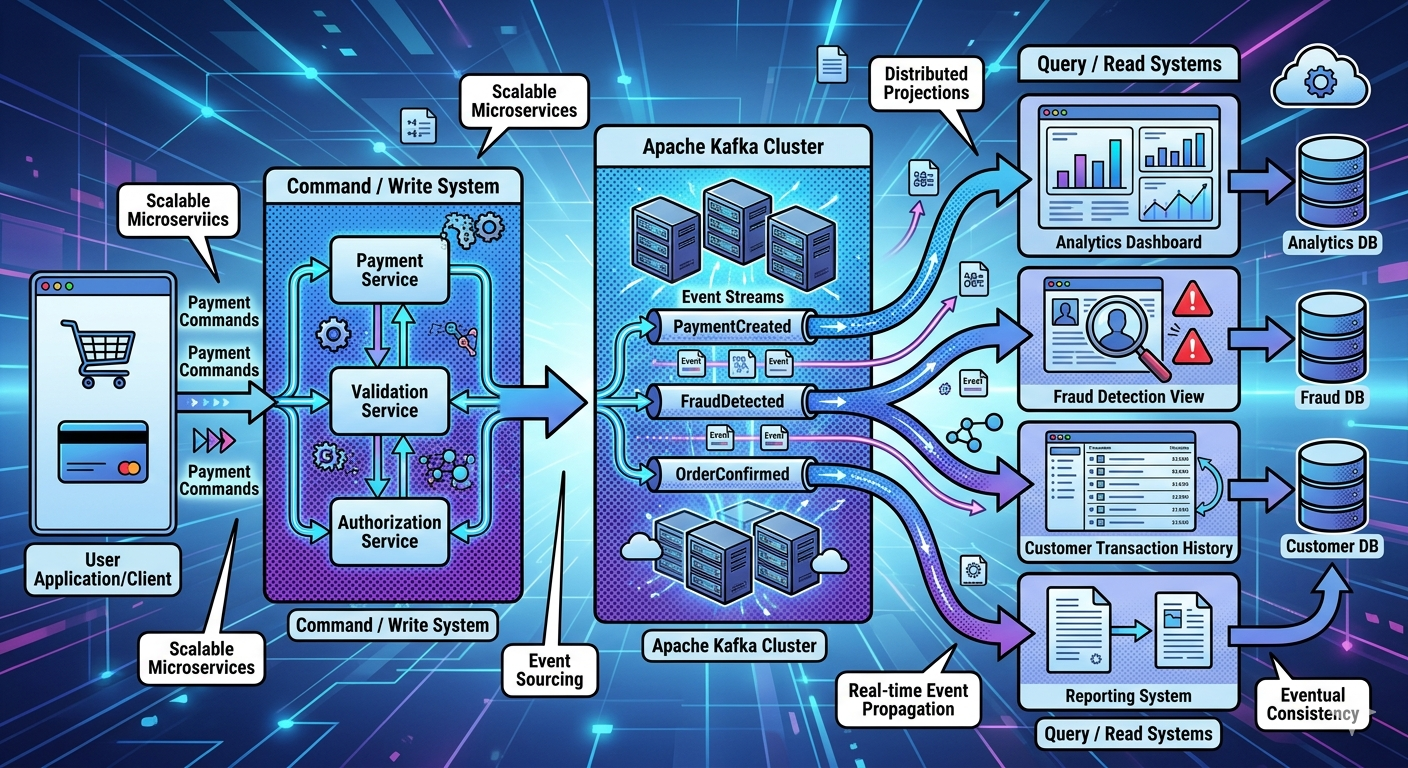
Separating Reads and Writes for Scalable Event-Driven Systems As modern applications scale, traditional architectures often begin struggling with: database bottlenecks heavy read traffic complex transactional workloads slow reporting systems tightly coupled services A single database handling: writes reads analytics search queries reporting caching can quickly become overwhelmed. To solve this, many distributed systems adopt: CQRS…
-
Event-Driven Workflows Explained Using a Payment System
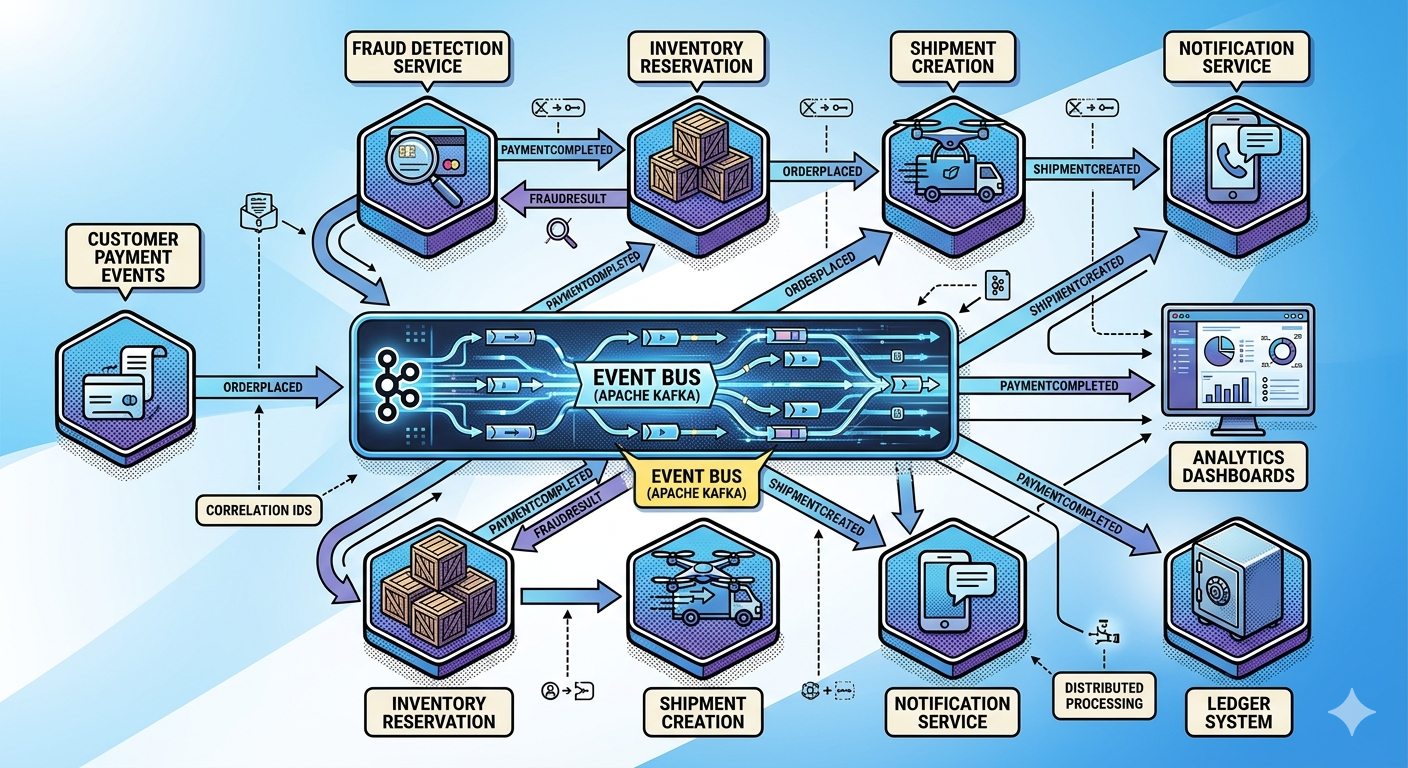
Understanding Real-World Event Orchestration with Kafka One of the biggest reasons organizations adopt: Apache Kafka is to build: Event-driven workflows. Modern business systems rarely consist of a single isolated action. A simple customer payment may trigger: fraud detection notifications inventory updates accounting entries analytics pipelines shipping workflows Traditional synchronous architectures struggle to coordinate such workflows…