Kafka Use Cases Across Industries
How Real-World Enterprises Use Kafka for Scalable Event-Driven Systems
At this point in the series, we have explored:
- topics
- partitions
- brokers
- consumer groups
- event sourcing
- CQRS
- retention
- replayability
- event-driven workflows
A natural question now arises:
Where is Kafka actually used in the real world?
The answer is:
Almost everywhere modern real-time systems exist.
Today:
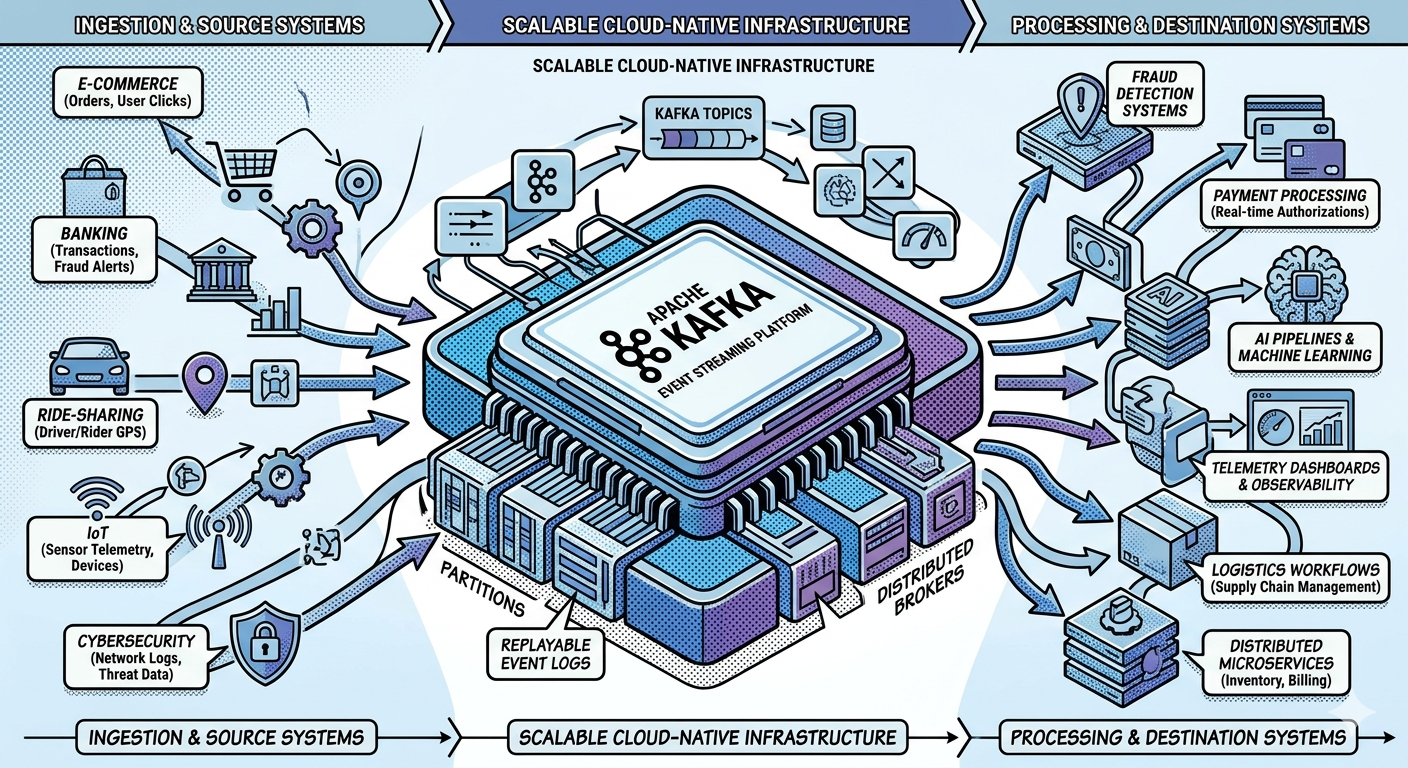
Apache Kafka
powers:
- banking platforms
- e-commerce ecosystems
- observability infrastructures
- ride-sharing systems
- streaming analytics
- IoT platforms
- cybersecurity pipelines
- logistics networks
- AI data platforms
Kafka became foundational because modern enterprises increasingly need:
- real-time data movement
- scalable event streaming
- distributed processing
- replayable event history
- asynchronous architectures
In this article, we will explore:
- major Kafka use cases
- industry adoption patterns
- real-world architectural examples
- why Kafka became dominant
- how different industries use event streaming
This article helps connect Kafka concepts to practical enterprise applications.
Why Kafka Became So Widely Adopted
Modern systems generate enormous volumes of events:
Examples:
- payments
- clicks
- API calls
- telemetry
- sensor readings
- transactions
- logs
- fraud alerts
- shipment updates
Traditional architectures struggled to process this data:
- in real time
- at massive scale
- across distributed systems
Kafka solved these challenges through:
- partitioned scalability
- distributed event streaming
- replayability
- durable logs
- asynchronous communication
Kafka as a Central Event Backbone
Many organizations use Kafka as:
Central Nervous System
for Enterprise Events
All major systems:
- publish events
- consume events
- react asynchronously
Kafka becomes:
The event backbone connecting everything.
Banking and Financial Systems
One of Kafka’s biggest adoption areas is:
Financial services.
Banks process:
- transactions
- fraud detection
- account updates
- compliance events
- audit streams
continuously and at enormous scale.
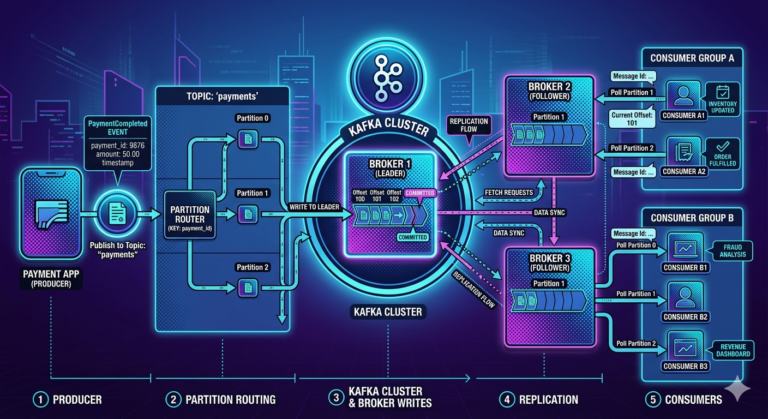
Real-Time Payment Processing
Suppose customer completes payment.
Kafka distributes:
PaymentCompleted
to:
- fraud detection
- accounting
- notifications
- audit systems
- analytics dashboards
simultaneously.
Why Kafka Fits Banking So Well
Banking systems require:
- durability
- ordering
- replayability
- scalability
- fault tolerance
Kafka provides all these characteristics naturally.
Fraud Detection Pipelines
Fraud detection requires:
- real-time event analysis
- streaming transactions
- low-latency processing
Kafka enables:
Transaction Stream
   ↓
Fraud Models
   ↓
Risk Alerts
in real time.
Audit and Compliance
Financial systems often require:
- immutable event history
- transaction replay
- forensic analysis
Kafka retention and replayability are extremely valuable here.
E-Commerce Platforms
Large e-commerce systems generate events constantly:
Examples:
OrderPlaced
PaymentCompleted
InventoryReserved
ShipmentCreated
DeliveryCompleted
Kafka coordinates these workflows asynchronously.
Inventory Management
Inventory systems consume:
- order events
- warehouse events
- shipment updates
Kafka helps maintain:
- distributed inventory synchronization
- scalable order processing
Recommendation Systems
E-commerce recommendation engines consume:
- clickstreams
- browsing activity
- purchase history
Kafka streams user behavior continuously into:
- machine learning pipelines
- recommendation models
Real-Time Analytics
Dashboards update continuously using:
- Kafka event streams
Examples:
- live sales dashboards
- conversion tracking
- operational monitoring
Ride Sharing Platforms
Ride-sharing applications depend heavily on:
- real-time streaming
- location updates
- event coordination
Kafka powers:
- driver tracking
- ride matching
- surge pricing
- payment workflows
Example Ride Workflow
RideRequested
   ↓
DriverAssigned
   ↓
RideStarted
   ↓
PaymentCompleted
Every stage generates events.
Kafka coordinates workflows across:
- dispatch systems
- pricing engines
- analytics services
- customer notifications
IoT and Sensor Platforms
IoT systems generate:
- enormous continuous telemetry streams
Examples:
- temperature sensors
- industrial machines
- smart devices
- vehicle telemetry
Kafka handles:
- massive event ingestion
- distributed stream processing
- real-time monitoring
Why Kafka Fits IoT Perfectly
IoT platforms require:
- horizontal scalability
- high throughput
- durable event ingestion
Kafka’s partitioned architecture excels here.
Observability and Monitoring
Modern observability platforms stream:
- logs
- metrics
- traces
through Kafka pipelines.
Example Observability Flow
Application Logs
   ↓
Kafka
   ↓
Monitoring Pipelines
   ↓
Dashboards & Alerts
Kafka acts as:
Real-time telemetry backbone.
Cybersecurity Systems
Security platforms process:
- login attempts
- network activity
- firewall events
- threat intelligence streams
Kafka enables:
- real-time threat analysis
- distributed event correlation
- anomaly detection
SIEM Pipelines
Security Information and Event Management (SIEM) systems often use Kafka for:
- log aggregation
- security event streaming
- distributed analysis
Kafka’s scalability is ideal for:
- high-volume security telemetry.
Streaming Analytics Platforms
Kafka became foundational for:
Streaming analytics.
Traditional analytics often processed:
- yesterday’s data
Modern systems require:
- real-time insights
Kafka streams data continuously into:
- analytics engines
- stream processors
- dashboards
Real-Time Dashboards
Examples:
- live payment volume
- delivery tracking
- operational health
- customer activity streams
Kafka enables dashboards to update:
- continuously
- at scale
Machine Learning Pipelines
Modern AI systems increasingly depend on:
- streaming data
Kafka feeds:
- recommendation systems
- fraud models
- anomaly detection
- real-time feature engineering
Why Kafka Is Valuable for AI
Machine learning requires:
- large historical datasets
- continuous event ingestion
- replayability
Kafka naturally supports:
- model retraining
- feature streaming
- event replay
Data Integration Platforms
Many enterprises use Kafka for:
Data integration.
Kafka connects:
- databases
- APIs
- microservices
- analytics systems
- cloud platforms
Kafka becomes:
Central enterprise data bus.
Microservices Communication
Modern microservices architectures heavily use Kafka for:
- asynchronous communication
- event-driven workflows
- service decoupling
Instead of:
- direct API dependencies
services exchange:
- events through Kafka topics.
Event-Driven Architectures
Kafka became one of the most important technologies powering:
Event-Driven Architecture (EDA).
Kafka enables:
- loose coupling
- replayability
- asynchronous scaling
- distributed workflows
This aligns naturally with modern cloud-native systems.
Why Enterprises Prefer Kafka
Kafka provides several strategic advantages:
1. Scalability
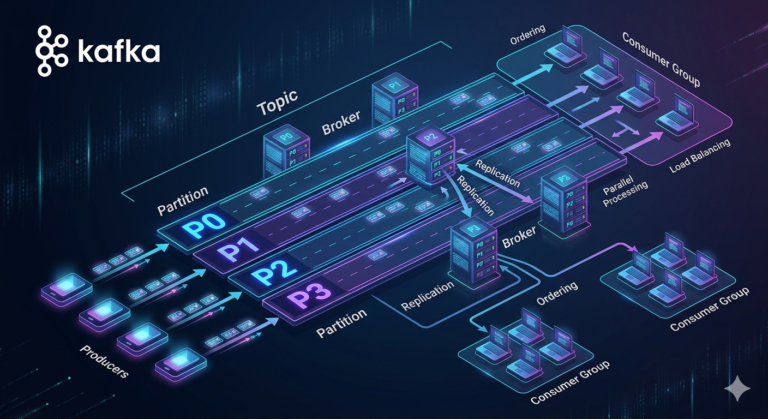
Kafka handles:
- millions of events per second
through:
- partitions
- distributed brokers
- consumer groups
2. Replayability
Kafka retains event history.
This enables:
- recovery
- debugging
- analytics rebuilding
3. Fault Tolerance
Replication provides:
- durability
- failover protection
- resilience
4. Ecosystem Integration
Kafka integrates with:
- databases
- cloud platforms
- stream processors
- monitoring systems
5. Real-Time Processing
Kafka supports:
- low-latency event pipelines
- continuous streaming architectures
Why Kafka Became Cloud-Native Infrastructure
Modern cloud-native systems increasingly require:
- distributed scalability
- asynchronous communication
- resilient workflows
- streaming architectures
Kafka became foundational infrastructure because it naturally supports these patterns.
Real-World Scale Examples
Large organizations process:
- trillions of events
- petabytes of streams
- millions of transactions
through Kafka-based infrastructures.
Kafka powers some of the world’s largest:
- payment systems
- streaming platforms
- logistics networks
- observability infrastructures
Kafka Is Not Only for Large Enterprises
Smaller organizations also use Kafka for:
- event-driven microservices
- analytics pipelines
- workflow coordination
- observability systems
However:
- Kafka introduces operational complexity
Simple systems may not always need Kafka.
When Kafka Is Probably Overkill
Small CRUD applications with:
- low traffic
- limited integrations
- simple workflows
may not benefit significantly from Kafka.
Architecture should match business needs.
Common Beginner Misconceptions
Misconception 1
Kafka is only for big tech companies
Kafka benefits many scalable distributed systems.
Misconception 2
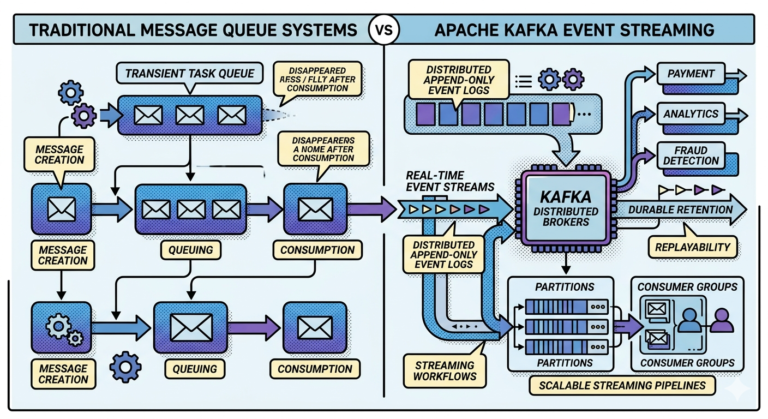
Kafka is just a messaging queue
Kafka powers:
- streaming
- analytics
- event sourcing
- workflow coordination
Misconception 3
Kafka automatically creates event-driven architecture
Architecture design still matters enormously.
Misconception 4
Kafka is mainly for logs
Kafka powers mission-critical transactional systems too.
Why Kafka Became So Influential
Kafka fundamentally changed how organizations think about:
- data movement
- distributed communication
- event processing
- real-time systems
Instead of:
- isolated applications
modern enterprises increasingly think in terms of:
Continuous event streams.
And:
Apache Kafka
became one of the foundational technologies enabling that transformation.
Key Takeaways
Kafka is widely used across industries including:
- banking
- e-commerce
- observability
- IoT
- ride-sharing
- cybersecurity
- analytics
- AI platforms
Kafka powers:
- real-time event streaming
- distributed workflows
- scalable analytics
- asynchronous microservices
- event sourcing architectures
Its core strengths include:
- scalability
- replayability
- durability
- fault tolerance
- streaming throughput
Kafka often becomes:
The central event backbone of modern distributed systems.
This is why:
Apache Kafka
has become one of the most influential infrastructure technologies in modern software architecture.