Understanding the Publish-Subscribe Model with Kafka
How Kafka Enables Scalable Event Broadcasting Across Distributed Systems
One of the foundational communication patterns in modern distributed systems is:
Publish-Subscribe (Pub/Sub).
This pattern powers:
- real-time notifications
- payment workflows
- streaming analytics
- fraud detection systems
- microservices communication
- IoT infrastructures
And one of the most widely used technologies implementing Pub/Sub at massive scale is:
Apache Kafka
The Pub/Sub model is one of the key reasons Kafka enables:
- loose coupling
- asynchronous communication
- horizontal scalability
- real-time event processing
In this article, we will deeply explore:
- what the Publish-Subscribe model is
- how Pub/Sub works
- publishers and subscribers
- Kafka topics in Pub/Sub
- multiple consumers
- consumer groups
- fan-out messaging
- real-world use cases
- Pub/Sub vs traditional messaging
Understanding Pub/Sub is essential for designing modern event-driven architectures.
What is the Publish-Subscribe Model?
The Publish-Subscribe model is a communication pattern where:
- publishers send messages
- subscribers receive messages
- publishers do not directly know subscribers
Communication happens through:
A shared messaging layer.
This creates:
- loose coupling
- asynchronous interaction
- scalable communication
Simple Analogy — YouTube Channel
Imagine a YouTube creator.
The creator:
- uploads videos
Subscribers:
- automatically receive updates
The creator:
- does not know every subscriber personally
- does not directly send videos to individuals
The platform handles distribution.
Kafka works similarly.
The Core Components of Pub/Sub
Pub/Sub systems usually contain:
| Component | Responsibility |
|---|---|
| Publisher | Sends messages |
| Broker | Distributes messages |
| Subscriber | Receives messages |
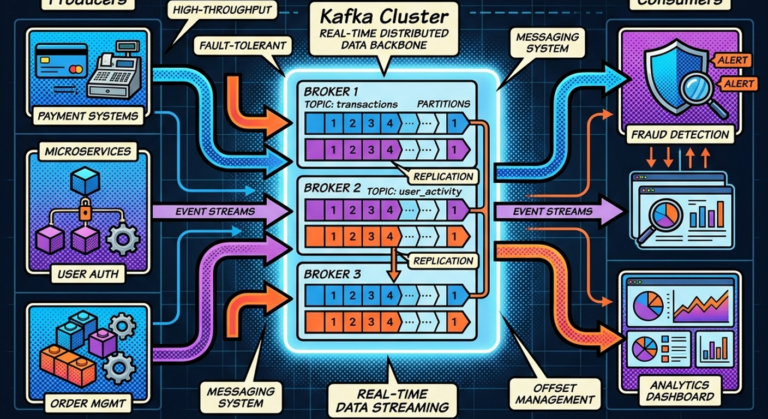
Kafka acts as:
The broker.
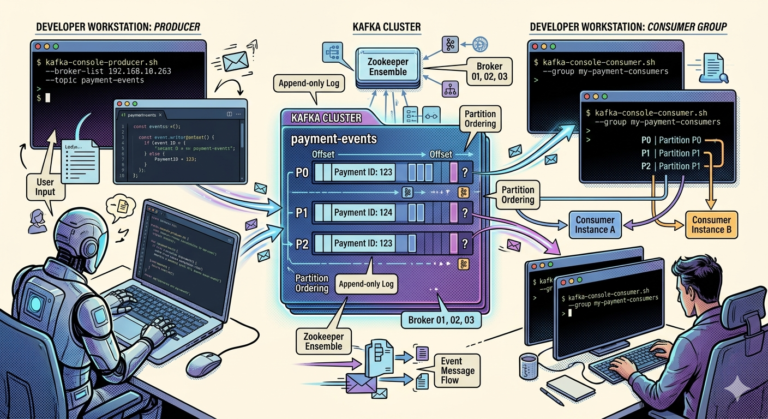
Kafka Pub/Sub Architecture
Basic flow:
Publisher
    ↓
Kafka Topic
    ↓
Subscribers
Publishers produce events.
Subscribers consume events independently.
Why Pub/Sub Matters
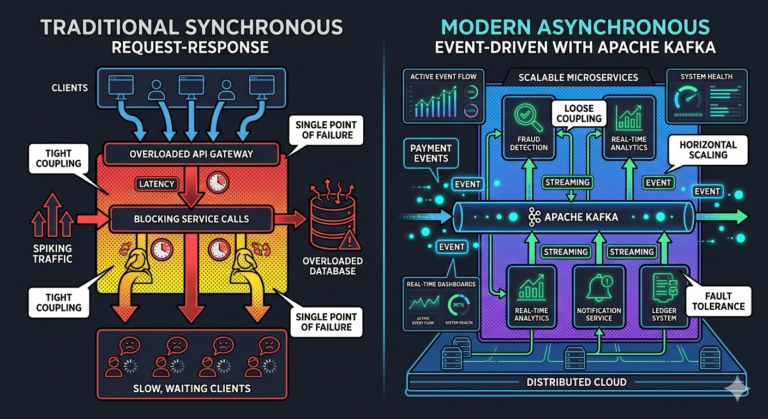
Without Pub/Sub:
Payment Service → Fraud Service
Payment Service → Notification Service
Payment Service → Analytics Service
The payment service becomes tightly coupled to multiple downstream systems.
This creates:
- dependency chains
- scaling challenges
- operational fragility
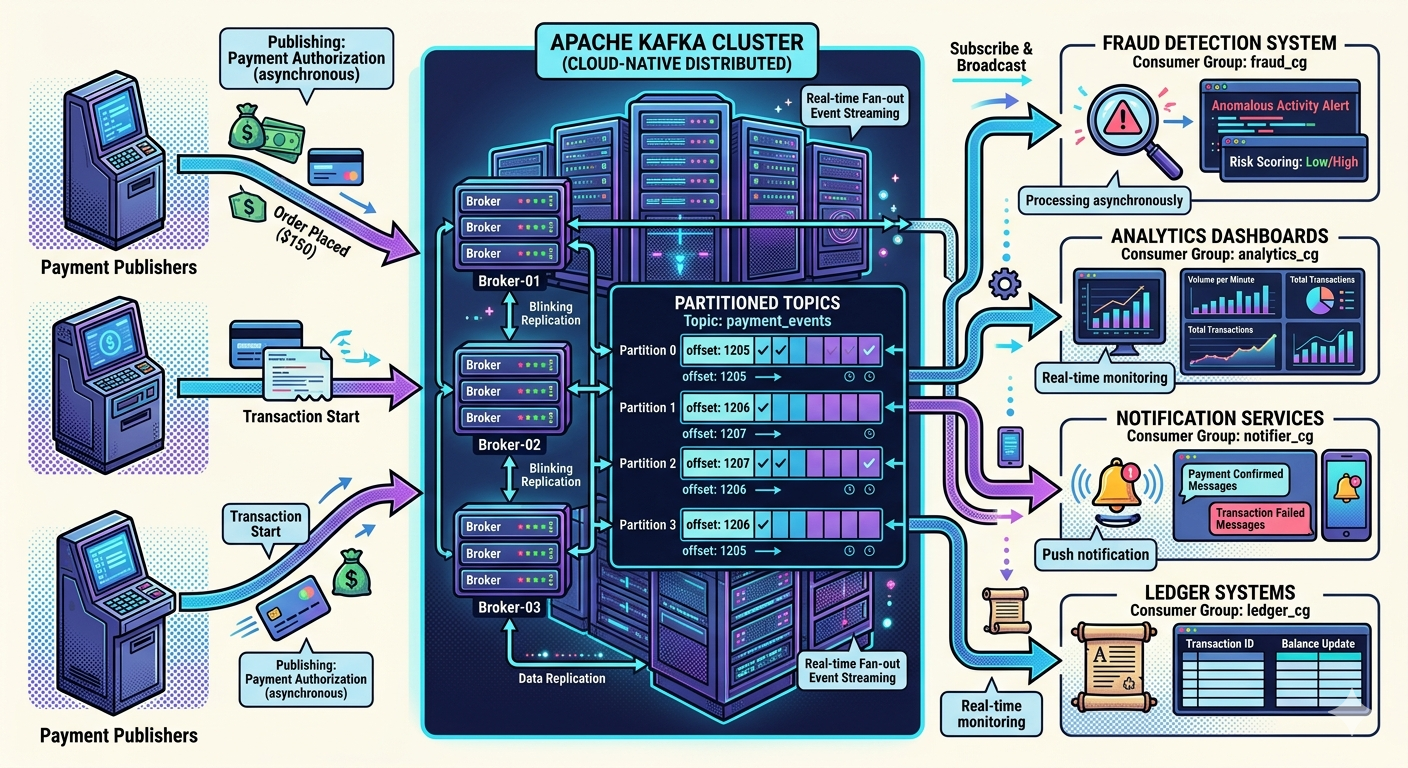
Pub/Sub Solves Tight Coupling
With Kafka Pub/Sub:
Payment Service
      ↓
payments topic
 ├── Fraud Detection
 ├── Notification Service
 ├── Analytics Service
 └── Ledger Service
Now:
- services remain independent
- new consumers can be added easily
- publishers remain simple
This is a major architectural advantage.
Understanding Publishers
A publisher is:
Any system that sends events into Kafka.
Examples:
- payment applications
- web applications
- mobile apps
- IoT devices
- backend services
Example Publisher Event
{
  "eventType": "PaymentCompleted",
  "transactionId": "TXN1001",
  "amount": 2500
}
The publisher sends this event into a Kafka topic.
Important Principle
The publisher:
- does not know who consumes the event
- does not wait for consumers
- does not manage downstream workflows
This creates:
Loose coupling.
Understanding Subscribers
Subscribers are systems that:
- listen to topics
- receive events
- react independently
Examples:
- fraud detection systems
- analytics services
- notification systems
- inventory services
Multiple Subscribers Can Consume the Same Event
Suppose event:
PaymentCompleted
Multiple systems may react:
PaymentCompleted
 ├── Fraud Detection
 ├── Notification Service
 ├── Analytics
 └── Ledger System
This is called:
Fan-out messaging.
Why Fan-Out is Powerful
Fan-out enables:
- extensibility
- independent processing
- real-time workflows
- scalable integrations
New systems can subscribe without changing publishers.
Kafka Topics in Pub/Sub
Kafka topics act as:
Event channels.
Example topics:
payments
orders
shipments
notifications
Publishers write into topics.
Subscribers consume from topics.
Topics Decouple Systems
Topics separate:
- producers
from: - consumers
This separation enables:
- asynchronous workflows
- independent scaling
- fault isolation
Understanding Asynchronous Communication
Pub/Sub systems are usually:
Asynchronous.
Meaning:
- publishers continue immediately after publishing
- subscribers process independently later
Example:
Payment Service publishes event
   ↓
Immediately continues processing
Subscribers react asynchronously.
Why Asynchronous Systems Scale Better
Asynchronous processing avoids:
- blocking calls
- waiting chains
- synchronous bottlenecks
This dramatically improves:
- throughput
- resilience
- scalability
Pub/Sub vs Request-Response
Traditional request-response:
Client → API → Response
Publisher waits for response.
Pub/Sub:
Publisher → Topic
No waiting required.
This creates:
- loose coupling
- independent processing
- scalable workflows
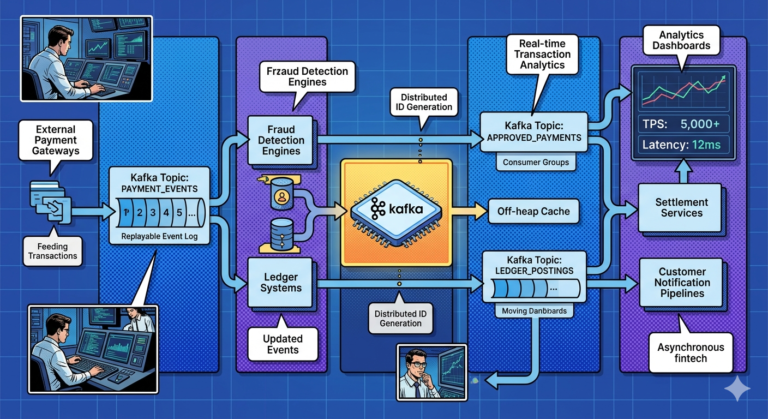
Real-World Example — Payment Platform
Suppose customer payment succeeds.
Publisher creates:
PaymentCompleted
Kafka distributes event to:
- fraud detection
- notification service
- accounting system
- analytics dashboard
All independently.
Real-Time Fraud Detection
Fraud engine subscribes to:
payments topic
As soon as events arrive:
- fraud analysis begins
This enables:
Real-time fraud detection pipelines.
Real-Time Analytics
Analytics services consume events continuously.
Dashboards update instantly.
Kafka Pub/Sub powers:
- streaming metrics
- business intelligence
- operational dashboards
Event Broadcasting
Pub/Sub enables:
Event broadcasting.
One event can reach:
- many systems
- simultaneously
- independently
This is one of Kafka’s greatest strengths.
Consumer Groups in Pub/Sub
Kafka introduces:
Consumer groups.
This is critical.
Why Consumer Groups Exist
Suppose:
- analytics system needs scalability
Instead of:
- one consumer
Kafka allows:
- multiple consumers sharing workload
Example:
Analytics Consumer Group
 ├── Consumer 1
 ├── Consumer 2
 └── Consumer 3
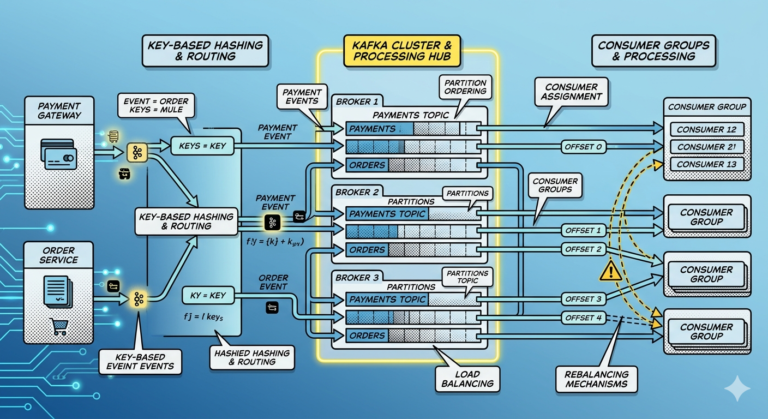
Kafka distributes partitions among them.
Important Kafka Rule
Within a consumer group:
One partition can be consumed by only one consumer at a time.
This preserves ordering.
Pub/Sub with Multiple Consumer Groups
Different groups consume independently.
Example:
payments topic
 ├── Fraud Group
 ├── Analytics Group
 ├── Notification Group
 └── Ledger Group
Each group receives:
- its own independent copy of events
This is extremely powerful.
Why Kafka Pub/Sub Scales So Well
Kafka combines:
- partitioning
- consumer groups
- distributed brokers
- append-only logs
This enables:
- massive scalability
- parallel processing
- real-time streaming
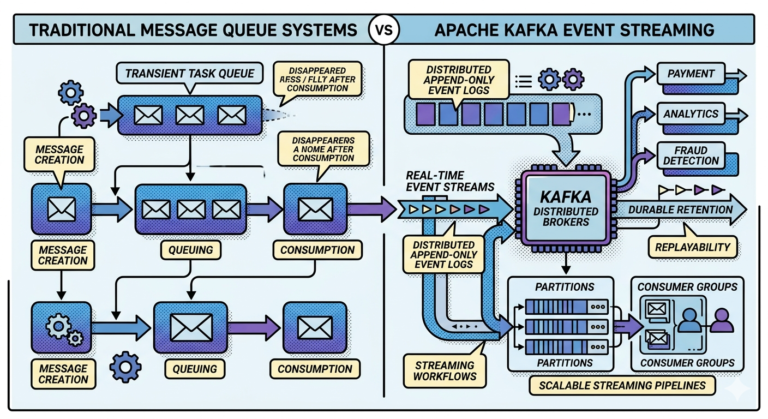
Event Retention Changes Traditional Pub/Sub
Traditional Pub/Sub systems often:
- delete messages after delivery
Kafka behaves differently.
Kafka:
- retains events persistently
Consumers can:
- replay history
- recover state
- restart processing
This is a major architectural advantage.
Replayability in Kafka Pub/Sub
Suppose analytics service crashes.
Kafka still retains:
- historical payment events
Consumer can restart and replay messages.
Traditional Pub/Sub systems often struggle with this capability.
Pub/Sub Enables Microservices Architectures
Modern microservices rely heavily on Pub/Sub because it enables:
- independent deployment
- asynchronous integration
- loose coupling
- scalable communication
Kafka often becomes:
The event backbone for microservices ecosystems.
Real-World Use Cases
1. E-Commerce Systems
Events:
- OrderPlaced
- PaymentCompleted
- ShipmentCreated
Consumed by:
- inventory
- analytics
- notifications
- logistics
2. Banking Systems
Events:
- TransactionCompleted
- FraudDetected
- AccountUpdated
Consumed by:
- compliance
- monitoring
- audit systems
3. IoT Platforms
Millions of devices publish:
- sensor events
- telemetry streams
- device metrics
Consumers analyze data in real time.
4. Observability Platforms
Logs, metrics, and traces stream continuously through Kafka topics.
Advantages of Kafka Pub/Sub
Kafka Pub/Sub provides:
- loose coupling
- scalability
- asynchronous processing
- replayability
- fault tolerance
- high throughput
These properties make Kafka ideal for modern distributed systems.
Challenges of Pub/Sub Systems
Pub/Sub also introduces complexity.
1. Event Ordering
Ordering exists only:
- within partitions
Global ordering becomes difficult.
2. Duplicate Events
Retries may cause:
- duplicate processing
Applications often require idempotency.
3. Debugging Complexity
Asynchronous workflows can become difficult to trace.
Distributed observability becomes important.
4. Event Schema Evolution
Changing event formats requires:
- compatibility planning
- schema governance
Pub/Sub vs Queue-Based Messaging
Traditional queue:
One producer
→ One consumer
Kafka Pub/Sub:
One publisher
→ Multiple subscriber groups
This distinction is fundamental.
Why Kafka Became Dominant for Pub/Sub
Apache Kafka became dominant because it combines:
- Pub/Sub messaging
- durable event storage
- stream processing
- replayability
- distributed scalability
Few systems combine all these capabilities effectively.
Common Beginner Misconceptions
Misconception 1
Kafka is just a queue
Kafka is a distributed Pub/Sub event streaming platform.
Misconception 2
Publishers know subscribers
Kafka decouples them completely.
Misconception 3
Consumers automatically share all messages equally
Consumer groups and partitions determine workload distribution.
Misconception 4
Messages disappear after consumption
Kafka retains messages durably.
Why Pub/Sub is Foundational to Event-Driven Systems
Pub/Sub enables systems to become:
- loosely coupled
- scalable
- resilient
- asynchronous
- extensible
This communication model is one of the foundational principles behind modern:
- microservices
- streaming systems
- event-driven architectures
And:
Apache Kafka
is one of the most powerful implementations of Pub/Sub ever built.
Key Takeaways
The Publish-Subscribe model allows:
- publishers to send events
- subscribers to consume events independently
Kafka topics act as:
- event distribution channels
Kafka Pub/Sub enables:
- loose coupling
- asynchronous workflows
- fan-out messaging
- scalable event streaming
Consumer groups provide:
- parallel processing
- workload distribution
- horizontal scalability
Kafka enhances traditional Pub/Sub systems through:
- durable event storage
- replayability
- distributed scalability
- partitioned processing
making:
Apache Kafka
a foundational technology for modern event-driven architectures.
Poster Idea Prompt
“”